Sunday, July 10, 2011

Snippet Reviews: Fever

I'll be the first to admit that Karen Marie Moning's Fever series isn't the best urban fantasy series out there, but it's far from the worst. More importantly, it holds a special place in my heart for introducing me to the concept of urban fantasy in the first place, and to help me get over some reading prejudices. I picked up the first book kind of by mistake, because Borders insists on putting them in the romance section (where they DO NOT belong). And upon discovering that it was a first person narrative I wanted nothing more than to get rid of it. I know that sounds like a stupid reason not to read a book, but at the time I had such negative feelings toward first person POV that it really seemed like a deal breaker. But the people I talked to about the book kept insisting that these books were the height of awesome and well worth enduring the narrative, so I gave it a shot.

The basic premise is as follows: Mac's sister is killed in Ireland and the police are unable to solve the crime. Angry and upset, Mac travels to Dublin for answers and discovers, to her horror, that supernatural creatures known as Fae seem to have been responsible. Mac learns that she is a Sidhe-Seer, a person with the ability to see the fae. She can also sense objects of power, weapons and other items that are of fae creation. One such object is called the Sinsar Dubh, a dark book of evil magic that has been let loose in the world. Many people (and non-people) are scrambling to find and own the book. One such person is Barrons, the bookstore owner and simultaneous object of Mac's lust and suspicion. There is also Vlane, a faery prince, who pursues Mac constantly in spite of her ongoing protests.

Book One: Darkfever: I really loved Moning's use of mythology. The story is very imaginative, turning what might have otherwise been a bland fantasy story into a genuinely interesting and somewhat frightening novel. Mac feels like a familiar, friendly character, probably because I've known people like her. Young, shallow, and untried, but full of unrealized potential. At times she's really irritating, but it's forgivable. This book is full to bursting with exposition and has absolutely no stand alone power, which is always a negative in my mind. 4 stars.

Book Two: Bloodfever: This is the book where we finally start to see Mac develop a spine and a sense of self. With some of the exposition out of the way, Moning got better at building a tone and setting a stage that felt real and creepy. The sexual tension between Mac and Barrons continues to grow, even as her feelings toward him remain uncertain. It's definitely a transitional book, but a good one. 4.5 stars

Book Three: Faefever: By this book Mac has learned a certain sense of self-sufficiency and independence, and she starts playing for multiple teams as it were. She's trying to prevent the walls between the human and fae worlds from coming down, and her struggles are admirable and entertaining. On the downside, this book has a massive cliffhanger. It ends on a climax instead of a resolution, and that kind of annoyed me. 4.5 stars.

Book Four: Dreamfever: This is a book where there is so much to love and so much to hate at the same time. This one has a sort of dystopian post-apocalyptic feel to it, which I'll admit isn't my favorite sort of plot thread. Mac behaves pretty irrationally and it's maddening at times, because by now you'd think she'd have more direction. But, the world building and plot remain engrossing. The secondary characters--Barrons, Christian, Dani--really shine. Again, there is a massive gimmicky stupid cliffhanger. At least I so this one coming. 3.5 stars.

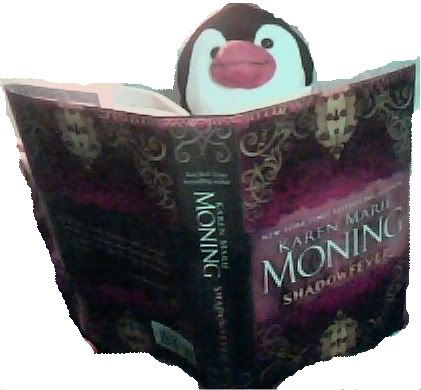
 Book Five: Shadowfever: This book had the responsibility of answering all of the questions from the previous books, and for the most part Moning does a decent job. It has more introspective portions than the previous books, and as a result I'd say the page count is higher than necessary. But you get a resolution to the biggest of the problems, Mac finds some stability in her love life and life in general. There's a definite hint of more to come from the Fever universe. 4 stars.

Overall, this is a great series. Granted, each book has absolutely no stand alone power and the plots kind of run into and blend into one another. Also, I do think the story could have been told in only three or four books had more careful planning been implemented. But if your willing to overlook the flaws and you like urban fantasy, I recommend this series.

Saturday, July 9, 2011

Secrets and Series

I mentioned in a previous post that I had every intention of reading The Darkest Secret by Gena Showalter despite the fact that I found The Darkest Lie to be skim worthy at best. I had a fairly positive experience with the early books in the series, and I really wanted to go on reading and enjoying them. So I'm very sorry to say that I really can't seem to get through The Darkest Secret either. Here I will try to explain why.

This book is about Amun, Keeper of Secrets. In the previous book he went on a quest to hell and was unfortunate enough to become possessed by many demons, and is now in anguish as a result. Haidee is a Hunter with a very long history. Suffice it to say she was once responsible for the death of a Lord--Baden. She has been reborn many times, each time losing happy memories. Strider captures her and puts her in a room next to Amun, where upon they find out that she calms him and keeps him sane.

I want to start off my mentioning the things that did work for me, lest I give the impression that this is a completely horrible book. I was really excited the have Amun as a lead character because he's one of the Lords that we don't know very well. I wanted him to be a wealth of interesting mystery and intrigue, and there are times when this book does give that impression. I also thought Haidee had potential and I liked her back story.

Right of the bat I had some issues with Amun and Haidee meeting under the circumstances that they did. They have some kind of magical/spiritual connection that heals his wounds...and that's fine. I can swallow that. But, she's also been dreaming of him and at first mistakes him for her boyfriend (who looks similar). Taken together that amounts to a pretty contrived initial interaction. Furthermore, the first third of this book is snail-pace slow because Amun is in a sick bed.

My next issue came with Amun's overly cavalier attitude toward Haidee's past. Remember, she helped to kill his friend. She had valid reasons for her actions, and I'm not at all trying to say that she's some sort of horrid villain. But I expected Amun to have feelings of conflicted loyalty--centuries old friendships vs. girl he just met that untrustworthy magic has connected him to. Some sign of an internal struggle would have gone a long way in helping me to connect with Amun.

I also want to mention some stylistic oddities. I don't know if I didn't notice these things in the previous books because I was too busy enjoying them, or if the editing has gotten more lax. Readers familiar with this series will know about Gilly, a teenage runaway, and how she has a crush on William. Their interactions are often sweetly awkward (and just a touch creepy) but in this book...let me show an example.

"Big, wide eyes of the purest chocolate. Sharp cheekbones that hinted at the passion she would one day be capable of giving. A pixie nose, slightly uptilted at the end. Lush pink lips. And framing all that beauty was a cascade of midnight hair." --Gena Showalter, The Darkest Secret

This is how William sees Gilly. I count eight adjectives in that short little paragraph--purple writing if ever I saw it. And I don't even know how exactly cheekbones hint at passion. And it gets weirder when he calls her "Gumdrop", or "Little Gilly Gumdrop". I guess that's supposed to be cute? For me it provoked nervous giggles and feelings of disturbance. I don't mean to imply that the whole book is like this, but there are certainly more examples of the like. Enough to have me cringing and wishing that Showalter had considered further editing.

The reason I really decided to give up on this book was simple boredom. I didn't feel a lot of emotional chemistry between Haidee and Amun. Sexual chemistry maybe, but that alone doesn't work for me. I found the premise unoriginal and the plot slow. I just didn't care what happened next, and after a week and a half of plodding along I felt it was time to raise the white flag. There are other books, after all.

According to my trusty Kindle, I made it 60% of the way through this book. In the interest of fairness, I'm not going to assign it a star rating. But I will say, if you have any doubts about this book, I recommend not even bothering. The early Lords of the Underworld books are decent, but I'm afraid the series has lost it's magic. DNF

Thursday, July 7, 2011

Unleash the Kraken!

The concept of steampunk is still really new to me. It's a sub-genre of historical fiction, or a sub-genre of science fiction depending on who you ask. Meljean Brook's The Iron Duke comes up a lot on lists and reviews. I'll admit, I really liked it. But I liked her novella, which is something of a prequel, even more. It's called Here There Be Monsters and can be found in the anthology Burning Up. I normally hate anthologies and novella length stories, but in this case I'm recommending it. Here is my review:

At approximately 100 pages Here There Be Monsters is the perfect one evening read. Ivory is a Blacksmith of great talent, but she has little money to her name. She is desperate to escape London, where people have been mysteriously disapearing from their beds. She strikes a bargain with the pirate Mad Machen for safe passage if she agrees to share his bed. At the last minute she changes her mind and finds another way out. Eben, "Mad Machen", spends two years searching for her, intent on courting her.

The style of this story is at once unique and firmiliar. Distinctly steampunk in genre, it has a mix of historical and science fiction that is remarkably well balanced. Pirates, sea monsters, wacky inventions, and of course a heavy dose of romance. Ivory and Eben are both unusual and very likeable. I love Ivory's talent as an engineer and watching her develop that into a calling. The courtship between Ivory and Eben is surprisingly unhurried for such a short novel. It gets pretty over the top at times, but that's all part of the fun.

I only wish this story had been longer, but such is the way of anthologies. Very enjoyable, highly recommended. 4.5 stars.

Wednesday, July 6, 2011

On Dukes (And Non-Dukes)

I'm still in a historical romance frame of mind, so I thought I'd review another recent favorite--Unveiled by Courtney Milan. One of my frustrations with historical romance is that all of the heroes tend to blend together in my mind, rarely standing out as unique. They fall into two types--the stuffy, overly serious noble who rules his estates (and his woman) with an iron fist. And the young, rake of a noble who's spent years breaking hearts and is now at last ripe for reform. In Unveiled you get something entirely different in Ash Turner and his brothers. Here is my review:

 To me this book was exactly what I want in historical romance. Intelligent, sedate, but without being boring. Passionate, tender,and very emotional. In short, I'm hard pressed to come up with any negatives.

Ash is from an impoverished family, and he's worked his from the ground up in terms of wealth and society. This culminates in his revenge plot against the Duke of Parford, who once failed to help Ash and his family when they were in dire need. In short, he exposes the duke as a bigamist and thus has the duke's children by his second wife declared illegitimate and unable to inherit title or property. By distant relation, the dukedom would then pass to Ash. Margaret is posing as her father's nurse in order the spy on Ash. When he meets her, he has no idea that she is the dukes daughter and therefor one of the people his suit has hurt most. He pursues her romantically and she finds herself falling for him despite herself, and unwilling to betray him.

I really loved both Margaret and Ash. Ash is determined in everything he does. His initial motivation isn't based on greed, and not even entirely on revenge, but rather in giving his two younger brothers the best future possible. He's overcome all manner of adversity in order to take care of his family. He applies the same ruthless persistence to his relationship with Margaret. But rather then acting the caveman and forcibly seducing her, he brings her around by helping her to see herself in the best possible light. Since she was declared a bastard, Margaret has thought herself worthless. When Ash tells her that her birth does not matter, that she is important and wonderful, she can't help but begin to believe him. They both do a lot of emotional growing in this book.

Now, I know nothing about law or inheritance in England in the 1800s, so I am unable to intelligently debate possible historical inaccuracies. I didn't notice them. A more knowledgeable person might be bothered.

I'm giving this book 5 stars, because as I said I just don't have any complaints. It's well paced, evocative, and deeply romantic.

Monday, July 4, 2011

Snippet Reviews: Wallflowers

Lisa Kleypas writes what I think of as comfortable bedtime books. Light, entertaining, and cheerfully romantic. And since I'm feeling in a historical sort of mood, I thought I'd offer my condensed opinions of her Wallflower quartet.

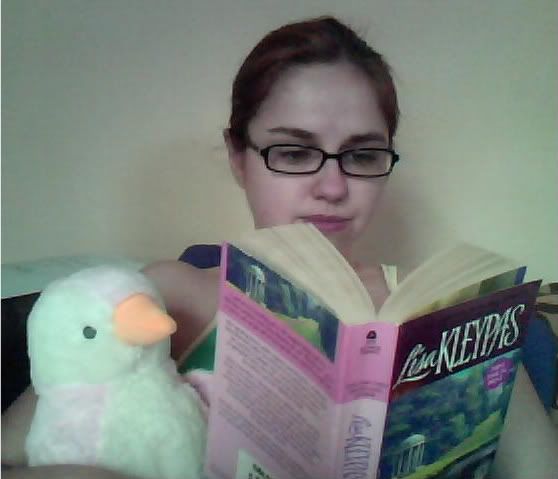
Petunia likes Scanal in Spring the best, but I think she's biased toward the pink cover.
In these books, four young women find themselves to be social misfits for one reason or another. Tired of never being asked to dance and each in desperate want of a husband, they decide to ban together to help one another. The strength of these books is the friendship between the women. I think in real life every woman either has friends like these, or wishes she did. And in the world of romance where heroes so often steal the show, it's nice to see a few female centered books.

Book 1: Secret of a Summer Night: Annabel's family is in financial ruins and she particularly wants to marry a rich nobleman. Her primary romantic pursuer is Simon Hunt, a wealthy businessman who she finds entirely unsuitable. Without spoiling, I'll just say that I at first I worried that Annabel would be unlikeable because of her prejudices. Fortunately she grows a lot with the help of her friends. Both Annabell and Simon have interesting back-stories. The romance is reasonably satisfying. And of course, the women and their antics are endlessly amusing. 4.5 stars.

Book 2: It Happened One Autumn: Lillian comes from an American family possessing a large fortune but lacking ties to the nobility. She has few of the social graces prized England's most elite bachelors. Marcus Westcliff is one such bachelor who finds himself coveting Lillian against his better judgement. Lillian is easily my favorite heroine in the series because she has such a bold personality. Westcliff's personality comes off as a bit generic, but he's still likeable. I loved the setting of this book. I loved the pace and process of the developing relationship. 4 stars.

Book 3: Devil in Winter: Shy, socially awkward Eve enters into a marriage of convenience with the somewhat villainous rake Sebastian St. Vincent. Even his name is villainy. The plot of this one is pretty cliched, and the pace is slow, but it's still entertaining. Eve is probably the driest of the heroines, even if she does develop a lot. I love St. Vincent, and he really saved the book for me. The other wallflowers have a smaller role in this book, which I found kind of disappointing. 3.5 stars.

Book 4: Scandal in Spring: Daisy, a romantic and fanciful woman, is the last wallflower left unwed. Her father threatens to make her marry his pragmatic and ambitious business associate, Matthew Swift. I'm a sucker for the opposites attract kind of romance. My only real complaint was that Matthew's past tragedies and the way they fit into the plot don't mesh all that smoothly. 4.5 stars.

Overall, this is a very good little mini-series of books if your in the mood for a something gentle and intellectually undemanding. I also recommend the Hathaway books, which are set in the same universe and come chronologically after the Wallflowers. I may be reviewing those at a later date. Happy Reading!

Saturday, July 2, 2011

Pride and Faythe

"What do you want me to say? 'Hey Marc, it turns out you were right. If I'd married you instead of going to school, they'd think I was worth what it costs to feel me. But since I'm only as valuable as my uterus--which is currently unoccupied--this time next week, I'll probably have gone the way of the dodo bird.'"--pg. 57, Pride by Rachel Vincent
The above quote pretty much sums up the core plot of Pride, the third book in Rachel Vincent's Shifters series. In the first two books, Stray and Rogue we are introduced to the werecat community, specifically to Faythe's story. Faythe is one of very few female werecats and she's in the midst of discovering an identity and purpose for herself. That identity is at odds with the usual pattern of a female werecat's life, which is to marry young and have many children. Instead Faythe attended college, then returned to take up the traditionally male role as a pride enforcer. When she's placed on trial for turning a human and then murdering him, her role and worth are called into question.
I don't mind a feminist theme in urban fantasy. Even though this book is a little heavy handed about it, I enjoyed the premise of a young woman trying to prove and defend herself to a very patriarchal justice system.

The entire plot centers around the trial, which means that there are more politics and talks than action and violence. This suits the underlying theme well, and makes the book a good bridge in the series. However, it does have an unnecessarily slow pace--some of the trial details could have been cut to speed things along.

I find Faythe to be likeable and irritating by turns. I think the central problem is that she's 23, but acts more like a girl in her mid-teens. She's petulant, self involved, impulsive, and short sighted. It's all well and good for an author to give her lead character room to grow, but in this case Faythe borders on unlikeable. This is all balance only slightly by the fact that I wanted her to prevail because of her unique position in her society. In other words, were she not the only female of her species with a perceivable back bone and personality that stood out, I might find her truly loathsome. As it is, her behavior is only barely tolerable.

This brings me to the relationships, both romantic and otherwise. Marc has to be one of the most ill treated heroes I've ever encountered. Faythe wants to be with him, but on her own terms (i.e she refuses even the most surface level commitment). Not only are they completely dysfunctional as a couple, they don't seem to work all that well as a team. Even though Marc outranks her and has more experience, Faythe doesn't listen to him and rarely obeys him. I really don't care for them as a couple. Then there's Jace, the third corner in the love triangle just waiting to happen. I despise love triangles. Unless the author handles them with the utmost grace and originality they are the cheapest of romantic conflicts. The non-romantic relationships interested me far more. Faythe's and her father don't always see eye to eye because she doesn't understand his wisdom, but her admiration for him is apparent. A new character, Kaci the teenaged tabby, is introduced. Faythe's attempts to bond with her are actually quite touching and entertaining.

This is one of those books where the good elements only just manage to outweigh the bad. I still like this series well enough, but I'm not overly eager to finish it. 2.5 stars.

Thursday, June 30, 2011

Snippet Reviews: Lords of the Underworld

In light of the fact that I'm reading The Darkest Secret by Gena Showalter, I wanted to reflect back on what has been kind of a hit or miss series for me. In that spirit, here are my shorthand (and relatively spoiler free) thoughts on the first six books of the Lords of the Underworld series.

The basic premise of the series is that a group of ancient mythic Greek warriors were responsible for the opening of Pandora's box, and as punishment each is cursed with of of the demons from the box. 

Book One: The Darkest Night: (Maddox Keeper of Violence and Ashlyn) I really enjoyed the world building because I love Greek mythology (even somewhat made up Greek mythology). The huge cast of characters made me dizzy and was a big negative for me. The main characters have complex and interesting back stories, but I didn't connect to either of them strongly. The romance was hot but at times felt forced. 3 stars.

Book Two: The Darkest Kiss :(Lucian Keeper of Death and Anya Goddess of Anarchy) I loved both protagonists: Anya is a pushy, destructive, loveable mess, Lucian is dark and sexy. They're an odd ball couple and it totally worked for me. I liked that the plot had some adventure elements. I felt that the pacing was off, dragging in some places and speeding ahead in others. And yet more characters are added. Oh joy! 4 stars.

Book Three: The Darkest Pleasure : (Reyes Keeper of Pain and Danika) I was worried about this one, because Reyes is essentially a self mutilator and having had close friends who dealt with that I'm sensitive to how it's handled in books. Showalter does an ok job. I really loved Reyes and Danika, I thought their chemistry was believable and worked well within the story. The plot of this one was very strong and engaging. 4 stars.

Book Four: The Darkest Whisper: (Sabin Keeper of Doubt and Gwen the Harpy) In this book I found myself more interested in the supporting cast than the protagonists. I liked Sabin fine, he's macho and sexy. Gwen on the other hand comes across as weak and whiny, only improving marginally throughout the book. I also thought the mythology surrounding the harpies was random and contrived.  Fortunately the plot is entertaining and the secondary cast, familiar to me by this point, keeps the book together. 4 stars.

Book Five: The Darkest Passion: (Aeron Keeper of Wrath and Olivia the Angel) I was so excited to see an angel heroine. Olivia was a wimp at first, but she develops a lot. I love her and Aeron together. The plot is complex, interesting, and much better paced than the previous books. I had one major frustration, and that was Legion. I HATED Legion. 3.5 stars.

Book Six: The Darkest Lie : (Gideon Keeper of Lies and Scarlet Keeper of Nightmares) I was so disappointed in this book. For reasons too spoilery to mention I had trouble connecting with Gideon and Scarlet's story and I ended up doing a lot of skimming. Point of fact, I didn't feel like I absorbed enough of the story to assign it a grade, so instead it's a DNF.

Overall: This is a good series, not great. The cast of characters is irrationally big, but most of them are likeable. There's fantasy and there's violence. The overarching plot is progressing at a snail's pace, but it is progressing. The romance (with the exception of book six) is believable to me. Even after a failed book I've willingly returned to read book seven, a fact which speaks for itself.

Monday, June 27, 2011

Musings From Atop the TBR Pile

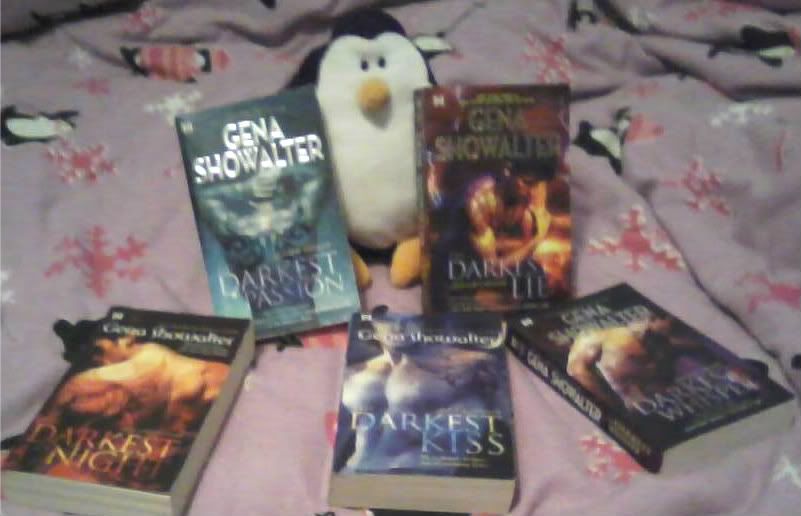
Here with *Duff the penguin to discuss our ongoing mission: concurring the TBR pile. This is only a small representation of my collection, but I didn't want to stack Duff to high (he tends to roll).

My pile is born from many sources. As penguins on a budget, we do what we can to cut costs. That means second hand stores, sales, coupons, borrowing, and trading. Paperbackswap has been a particular life saver. I can't recommend that site enough. With their give a book, receive a book system I satisfy my book cravings without taking up more space (which is definitely an issue).

The selections range from random to systematic. Sometimes I pick up a book simply because I like the cover art. More often I'm encouraged by positive reviews from trusted sources. And when I find a book I like, I compulsively search out every book in that series or by that author. This happened with Ilona Andrews' Kate Daniels books, Gail Carriger's Parasol Protectorate books, and of course Patricia Briggs Mercy Thompson books.

My main problem is deciding what order to read in. I try to mix it up, not read to many urban fantasy or historical romances in a row. I used to have a strict system, but I cheated so much that it wasn't worth it. These days I kind of select at random. Spontaneous reading is happy reading


*I feel obligated to mention that Duff (Dougal Ulfric Fergus) was a random gift from my sweety. He was left at work for me with a very nice love note. Five years and he's still a sweetheart. I'm one lucky girl!

Sunday, June 26, 2011

Mechanics and Monsters

After the awful reading experience that was Ascension (Guardians of Ascension) I went searching through my TBR pile for a pallet cleanser of sorts. A book with vampires and other supernatural elements that was well written (or at the very least, did not suck completely). I remembered really liking Moon Called by Patricia Briggs, so I thought it's sequel, Blood Bound might offer the perfect solution.

Plot Summery (MINOR SPOILERS): Mercy is approached by her vampire friend, Stefan, to help in tracking down a vampire gone rogue. The two quickly discover that the vampire in question is also a powerful sorcerer, and that his mere presence in the city is causing a surge of violent crimes. When the task of taking down the villain foils both vampires and werewolves, it falls to Mercy, with her unique abilities as a coyote shapeshifter, take him down.

Patricia Briggs isn't a perfect urban fantasy writer, but she does several important things very well. The world building is simple compared to a lot of paranormal books, making them easier to follow and more enjoyable. Instead of complex mythology, the story rides on interesting characters. In this book, readers get a slightly more in depth look and Mercy's personality, as well as the secondary characters--Adam, Samuel, Stefan, etc. The relationships begin to get more complex. Meanwhile, the action is present and ongoing. Everything, both action and character developing, is done without repetition or flowery language.  It is an intricate yet readable story, with touches of horror and humor.

The issues I have with this book are more due to content than style. Perhaps I'm bored with vampires and the way they're often portrayed in urban fantasy, or perhaps this book was using too many cliches. I was a bit bored with the vampire politics and details of vampire nature, which are no different than what I've encountered in so many other books. The villain was suitably scary, but not very original. Also, I had to sigh a bit at the growing love triangle between Mercy, Adam, and Samuel. Personally, I don't care for that kind of conflict in my books. At least Briggs didn't sink to the lowest common denominator by having Mercy sleep with every hot man she encountered. In fact, I thought Mercy handled things fairly well. But the mere hint of a love triangle always irritates me.

All told, I love Mercy as a character and I think the series is well worth reading. One overarching detail that I love is that in the midst of all the violent drama, Mercy is still a woman with a full time job as a mechanic. She doesn't forget this even when the world is falling apart--a very admirable character trait. I look forward to the rest of her adventures. 4 stars.

Friday, June 24, 2011

Dragonflies Stuck In My Head

I believe that, for anyone who reads a lot, their are certain books that just implant themselves in your mind and heart. Books that, once read are never forgotten. Books that you find yourself thinking about and relating to years after you initially read them. For me, Diana Gabaldon's Outlander books (particularly the first trilogy) are like that. There is something so touching, so expansive, and so purely entertaining about Clair and Jamie Fraser's story that I simply can't get it out of my mind.
After finishing Outlander I immediately wrote a review detailing how surprised I was that I enjoyed such a weighty piece of historical fiction. It isn't just the romance, although for me that's certainly part of it. It's the adventure, violence, history, turmoil, and attention to detail that make it stand out. I said all of this, to anyone who would listen. But I never reviewed Dragonfly in Amber, though I certainly enjoyed it almost as much. The reason for this is simple. Dragonfly in Amber makes me sad. I think that when I finished it the first time I was way too emotional to write about it objectively.

For this reread, I actually decided to listen to the audible edition . There's nothing like being read to, and since I am familiar with the story, it's alright for me to multitask a bit--cooking, doing laundry, shelving books at work--without fear of missing anything.

OBLIGATORY SPOILER WARNING: The book starts out with Clair, twenty odd years after the end of Outlander, in the 1960s in Scotland with her daughter Brianna. Clair's purpose in traveling to Scotland is twofold: she wants to explain to Brianna the truth about her father and tell the story of her long ago adventures in time travel, and she wants to find out what happened to the men she knew who fought at Culloden in 1745. My initial thought was, why tell the story this way? Why would Gabaldon show her hand so early, letting her readers know right off the bat that 1) Clair and Jamie were unable to prevent the Scottish rising, as was their stated intent at the end of Outlander, and 2) Clair ultimately ends up leaving Jamie and returning to her own time, thus obliterating whatever happily ever after they appeared to have at the end of Outlander. Why tell the end of the story first? I guess it's because in this case suspense is not the point. Tragedy is the point.

Clair tells her story to Brianna and Roger (a historian), beginning with a journey to France. There Jamie attempts to befriend Charles Stuart and prevent him from starting the Scottish rising. Although we already know the basic outcome of this, the story remains entertaining because of the strong voice that Claire presents as a narrator. Her varied and interesting life is at times amusing, and of course at other times heart breaking. Eventually we follow Claire and Jamie back to Scotland, to war, and to their goodbye.

The characters are the soul of the story, and much could be said about them. I was already attached to Claire and Jamie, and certainly they go through a lot in this book. They develop as individuals and as a couple. But I was particularly intrigued by Brianna, due to the strange circumstances of her origins and her upbringing. The focus of this book isn't on her, only delivering hints of her personality, but I enjoyed her presence all the same. Roger's presence in the story is equally interesting.

The biggest drawback of these books, for me at least, it the length. You have to be willing to invest a lot of time, and the plot doesn't exactly move at lightning speed. Yet there isn't too much wasted space. The details, even those that seem irrelevant, add to the richness of the story. As much as I enjoy all of that detail though, it took me three weeks to get through this book the first time, and only slightly less time to get through it again.

I had forgotten that the book ends on something of a cliffhanger, though a positive one. One of the things I loved about Outlander was that it ended with a sense of cautious hope for the future, rather than a sugary sweet happily ever after. This book does much the same thing, delivering a solid ending with a strong hint of more to come.

This book will always stand out to me as the book that made me cry the most. While I tend to get weepy at books, I rarely launch into full sobbing, but I did with this book. Any book that can draw you in that deeply is an undeniable success. 5 stars.
Related Posts Plugin for WordPress, Blogger...