Showing posts with label Christine Feehan. Show all posts

Monday, March 4, 2013

Misc Monday: Top Eight Most Annoying Traits in a Hero

Romance month has ended, but I would be remiss if I didn't even out the gender bias created by the last Misc. Monday. So, without further ado, the most annoying traits among book heroes.


Sea Swept (Chesapeake Bay Saga #1)#8 He's Afraid of Love

One of the most tired and boring tropes in romance is that moment when the hero realizes he has feelings--like, real emotion-y things for the heroine--and he responds to it with pants pissing terror. He copes by being a jackass or finding an excuse for a third-act breakup. Sometimes his feelings are excusable or justified, but mostly they're just annoying. Falling in love is scary, but it's also exhilarating and joyful. Most people are happy to be in love, at least initially. Most people want to make a connection like that with another person. The number of romance heroes who shun their feelings so readily is irritating and disturbing. 


Halfway to the Grave (Night Huntress, #1) #7 He's Slept With Approximately All of the Women

It's disturbing to me that romance novels have some extremely man-whorish heroes, but rarely or never slutty women. Oh, there are virgin heroes and prostitute heroines, but for the most part the men have all of the experience and the women have all of the "virtue". What's even more disturbing is when his dog-like habits are glorified in the text. Yes, sexual experience is a plus, but too much is just gross, in my humble opinion. In reality, men that have slept around that much are far more likely to have a couple kids and an STD or two.Condoms have failure rates, people. 
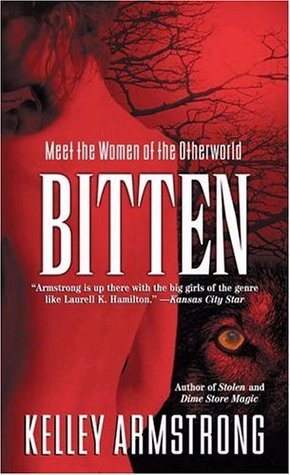


Bitten (Women of the Otherworld, #1)#6: He's The Jealous Type

He get's upset when her ex-boyfriend shows up, he doesn't like her guy friends, he wants all of her attention. He's jealous and possessive--he basically thinks he owns her. I don't know why authors seem to think this behavior is sexy. In the real world, overdeveloped jealousy is a huge red flag in any relationship. It smacks of insecurity in himself and a lack of trust in her. Ultimately, jealous behavior is a relationship killer, so I never trust the possessive hero to make the happy ending work in the long term. 


Dark Lover (Black Dagger Brotherhood, #1)#5: He Has No Communication Skills

Yeah, we all know that guys are not as good at expressing their feelings as women. Nothing wrong with showing that in a romance novel. However, the when the hero's total lack of ability to express his feelings leads to the much dreaded Big Mis. Any conflict that could be easily avoided with a simple five minute conversation is maddening, and has no reasonable place in my books.


Dark Prince (Dark, #1)#4: He's Controlling

There's a fine line between stubborn and total asshat. The hero that's forceful and pushy can be a great challenge to a heroine, and if the heroine is strong willed and pushes back--no problem. The problem is when the hero is, in reality, a complete control freak. When the hero feels the need to dominate every aspect of the heroine's life, often "for her own good", to a point where she totally loses herself to the relationship. I hate seeing the heroine sacrifice her freedom and personal goals in favor of a hero that wants to keep her safe at home. 


Lover Enshrined (Black Dagger Brotherhood, #6)#3: He Has Unresolved Addiction Issues

More and more romance authors have been trying to tackle the issue of ongoing battles with addiction. For some reason, they lean toward letting the male have an addiction problem. No author that I have yet encountered has handled the subject to my satisfaction. The problem is, addiction is a consuming condition. In reality, an addict recovers only when they decide for themselves that they want to change, and they have to work hard to make it happen. In romance land, addiction is healed by the power of love, with the hero changing as a result of the heroine's influence, or because he wants to keep her. The magic healing is actually pretty insulting in it's ignorance. 


#2: He's Sexist


Dark Destiny (Dark, #13)Another one of my least favorite tropes is  the hero the doesn't believe a woman can do a particular job/activity--contracting, firefighting, cycling, whatever. The heroine's job is to prove him wrong. This plot line exhausts me, because I find it depressing that the heroine has to earn the hero's respect in a given field, while he receives respect implicitly. I feel like we should have moved past this sort of thing by now. While gender bias definitely does exist in certain fields, I would prefer that it not be used as the hero's entire character arc.
New Moon (Twilight, #2) 
#1: He's a Dumb-ass Enabler

The only thing more annoying than a too-stupid-to-live heroine is the hero that constantly enables her stupidity. He plays the night in shining armor to her perpetual damsel in distress act. She jumps into shark infested water, and he fishes her out. She can't decide between two jobs or two men or two slices of pie, and he just patiently waits out her slow as hell thought process. His love makes him totally oblivious to the fact that his new honey-buns is honestly completely useless. The dumbass enabler is annoying because he fails to empower the heroine, to allow her some character development, to let her stand on her own. Quite the contrary, he does everything, to the point that she might as well be a cardboard cut-out. And, as I said last Monday, there is nothing worse that a flat heroine.


Monday, October 8, 2012

Misc. Monday: Reading Romance as a Teenager (And Beyond)

The Raging QuietThe process of blogging and reviewing really forces you to think about why you like the things that you like. This isn't an easy task for me, since my tastes are all over the place and perhaps a bit mercurial. My likes and dislikes continue to evolve, but one fact remains: I really like romance.

My love of romance was likely spawned at a very young age, but while it might be interesting to talk about the effects of Disney movies on a child's brain, my focus on romance in literature began with The Raging Quiet by Sherryl Jordan. It's the story of a young woman (in colonial times?) who befriends a deaf man, and ultimately forms a bond of affection with him despite the prejudices and suspicions of the towns people. I read this book when I was eleven, and it was responsible for flipping that switch in my brain that made me want to read romance centered novels.

Sadly, the face of young adult literature was bleak when I was that age, at least from where I was sitting. The public library that offered most of my reading material just didn't have much for teens or precocious preteens. So, after I read everything they had from Sherryl Jordan, plus the odd contemporary YA, I kind of got the hint that I might need to move on to adult literature. By the time I was twelve or thirteen, I was combing the adult fantasy shelves (our library did not have a romance section at the time) looking for adventure in fairy tales.

Midnight BayouI got into reading actual Romance Novels because of their availability in my  household. My mother read them, so they were always around, and by the time I was thirteen no one thought to question what I picked up. Mom wasn't much for forbidding books. I remember being a freshman in high school and having a friend tell me that she wasn't allowed to pick up books or movies unless her parents screened them first. This concept was so foreign to me that I couldn't get past it, and kept questioning it-- "Seriously, I can't just lend you a book without you getting in trouble?"

I digress.

My first proper romance novel was Midnight Bayou by Nora Roberts. I liked, and still do like it because of it's strong characters and intense, steamy relationship building...But also because it has ghosts. Roberts actually likes to sneak a lot of ghost here and there in her otherwise contemporary books, but in this case the ghosts are central to the plot. And it is fantastic. So while I did go on to read a lot of contemporary romance and eventually some historical, my primary drug of choice became paranormal romance. From there it was a skip and a jump to Christine Feehan and Maggie Shayne, who's books I spent my allowance on and asked for for Christmas.

Dark Prince (Dark, #1)It's a valid point that both Roberts and Feehan pepper their novels with fairly graphic sex scenes. They weren't written with teens in mind. I just don't think it matters much. That is, I don't think that reading such scenes at that age is damaging in the way that some parents assume it is. Not all teens are super impressionable sponges that soak up and imitate everything they encounter in fiction.  You also have to take into account that romance novels (with some exceptions), portray mostly monogamous sex between people in love. So were I to imitate them, I'd end up traveling to the Carpathian mountains in order to find my lifemate, for whom I've been saving myself. Or something.

These days, there are so many really good options for teens. The climate has changed, with the young adult market having exploded, and now there are plenty of (nice, safe, sex free) romance novels available that are specifically designed for teens. I find them in my formerly very boring local library, and I'm really excited about that. But just as I think it's okay for adults to indulge in a little YA fiction, I still believe that there's nothing wrong with a well adjusted teen trying out some adult fiction. Romance novels have the ability to portray healthy relationships, communication, compromise, and happy endings in a way that no other genre can quite attain. So, here's to romance novels, and all of the people out there who are just discovering them. Let's keep Happily Ever After alive!

Monday, September 17, 2012

Misc. Monday: Reading YA as an Adult


That title should, by all rights, say "Adult", because I don't think I've ever fully grown up. I don't really plan to. I'm going to keep my Disney movies, and my dolls, and my fuzzy pink slippers, thank you. Those things aside, I am in all other ways an employed, rent paying, married twenty-something adult. Who occasionally reads teen literature.

My Journey Away From, and Back Into YA...


I read virtually no teen literature while actually a teen. The last arguably young adult thing I remember picking up was Summers at Castle Auburn by Sharon Shinn when I was twelve or thirteen. By Christmas of my thirteenth year, though, I was pretty much exclusively reading adult paranormal romance. I remember this, because I asked for a bunch of them for Christmas and that's exactly what I got. My mother has never been one to forbid books...but that's a story for another post.

So, my teens went by with Harry Potter being the only under 18 MC in my life. There were a couple of reasons for this. The primary reason is that I'm always resistant to entertainment that reflects whatever is actually going on in my life. I wouldn't watch teen movies while I was a teen, or college movies while in college. I drove everyone crazy during my engagement because I wouldn't even watch Bridesmaids. I can't explain it, other than to say that it's not escapism for me if I'm going into the same environment.

Then, about a year and a half ago, I was browsing the internet for books. I came across Rachel Vincent's Soul Screamers series. I was already familiar with her Shifters books, and liked those well enough, so I was thrilled to see that she had something else. But, oh whoa is me, they were young adult. It got me thinking things over, and I realized that I was now several years removed from high school, entirely past the teen stage of my life. Thus, it would now be much less uncomfortable for me to read a book with a high school setting. I knew it was going to be an easy read, it wouldn't take up that much time, and so it seemed like it would be silly not to give it a try.

I haven't actually caught up on the Soul Screamers books (someday, maybe), but what they did do was open the door for me to read a genre that I had bluntly ignored for eight or nine years. This meant that I had well over a decade of untapped authors and series to try out, and to say that I dove in head first would be an understatement. You can see on this blog that I've reviewed quite a few YAs, and I've tried out even more. I love these things.

The "Shame" of Reading YA


I put shame in quotations to emphasize that I personally, absolutely do not feel ashamed to read YA. However, shortly after I started talking about these books I noticed that there are plenty of people--in real life, on forums and blogs, in review comments--that are eager to shame adults who read teen books. It's usually along the lines of  "I don't know why all of these adults want to read things meant for young people, what is wrong with them, this is yet more proof that literacy is in the toilet, no wonder there are so many stupid people..." and so forth.

I can't defend all adult YA readers, because I don't know all of them. It is entirely possible that some of them are stupid or barely literate or incredibly immature. I highly doubt that this is the case. It's far more likely that most of them are like me. There is nothing wrong with my education or my reading ability. I've read over a dozen Shakepeare plays, Jane Austen, the Brontes, Charles Dickens, and so forth, many of my own volition. I've slogged through scientific journals where the jargon is so thick you could cut it with a knife, and I've been made to write critical essays about them after the fact. My brain is in full working order. On an unrelated note, sometimes I read teen books.

As I said, though, I also read romance novels, so I'm inoculated to the shame of reading stigmatized genres. Sit is a cafe full of frat boys with a book who's cover looks like this--


--and your ability to feel shame will gradually dwindle into nothingness.

Why Adults Read YA


Now that we've established that adults can read YA, you might ask "But why would you want to?"

The first reason is that YA is oddly nostalgic. I'm not saying that I'd like to relive my teen years, because they weren't exactly easy. But sometimes reading about a character who's dealing with the same issues that I dealt with back then is cathartic. I can say to myself, "Yep, I got through that. Phew..." Sometimes there will be a character that reminds me of an old friend, or a setting or circumstance that I remember. In other cases, the characters are dealing with such tough stuff that it makes me feel like I got off easy as a kid, and that is also a comforting thought. Sort of.

The second reason that I like reading YA is that I really enjoy good character focused stories with a lot of personal development for the main character. That is exactly what a good young adult book should be about. Most people take the biggest strides toward finding themselves between the ages of 15 and 25. Watching a character do just that, and find courage, integrity, and purpose, is absolutely fascinating.

...specifically, YA romance


Anna and the French KissSometimes the characters also find love. This is the sticking point for most people that argue with me against the merits of teen literature. I encounter a remarkable number of people who think that a romantic relationship that begins in high school can't or should not work out. To which I say: Screw you. It's great that you think you've found the perfect formula to lasting relationships, and I hope that works for you. For me, personally, I don't think that such a formula exists, and I don't think that older people have a monopoly on love that lasts. I believe there's hope for teen couples, because I was once part of a teen couple, and we ended up married. After a very long engagement (I'm not reckless).

There are a couple of things that I like about teen romance. Primarily, I like that it's usually based on pure relationship development, where sex is a small or nonexistent factor. In adult romance, authors can get caught up in the physical aspects of the relationship and forget that there is also emotional development that needs to happen. I find that young adult authors are often better at the friendship, connectivity, and longing that are involved in the early stages of a relationship (for good examples, see Stephanie Perkins, and Jolene Perry).

And Now For A Break


All of this was my long winded way of saying that I do, with absolute conviction, love young adult novels. However, I may be taking a tiny "break" from them. Oh, not entirely, but I would like to cut it down to one or two a month. I get a lot of review requests from YA authors (you guys rock, and thank you for the opportunity), and as a result I feel like they've taken over my reading hours and this blog to a greater extent then I would like. In the coming months, I'm going to try to focus on the adult books gathering dust in my TBR. I miss them. I miss the gore, and I'm not going to lie, I miss the sex.

That said, to all of my adult readers, specifically those who have not read any teen literature in recent years, I really hope that you'll give it a try. There are a lot of amazing authors doing phenomenal work in that genre. These are authors that take their audience seriously, and we shouldn't be afraid to be a part of that audience.

Thursday, November 24, 2011

Ten Things Every Heroine Should be Thankful For

10. Hair Worthy of a Shampoo Ad


9. A Kick Ass Wardrobe


8. Those Little Supernatural Beauty Enhancements


7. Traveling to Exotic Locations


6. Access to POWER!


5. Intriguing Job Opportunities


4. Really, really big...Swords


3. Animal Sidekicks


2. Loving Families


And Finally, the #1 Thing Every Heroine Is Thankful For....Her Hero!


Sunday, July 17, 2011

Christine Feehan's Carpathians: The Good, The Bad, and The Fanged

The early books in Christine Feehan's Carpathian series are a particular guilty pleasure of mine. Why guilty? Well, because the truth is that there is a lot wrong with them thematically and stylistically. They are formulaic and repetitive, kind of anti-feminist, and in some case make no sense at all. Yet they're deserve a certain amount of mention and discussion because of their influence on the paranormal romance genre. Christine Feehan is one of the first authors that I know of to use the fated mate trope in such an unapologetic fashion, and to make it work so well. I suspect that she is responsible for the mass popularity of fated mates in the last decade, so we have her to thank for that (or blame, depending on your feelings).


Lest anyone think that I'm presenting myself as an expert on the Carpathian books, I have in fact not read every single book word for word. I read up to Dark Melody (book 12) with great dedication, and after that point I started to skim and skip, or listen to the audio version. I have yet to even open  Dark Peril, the most recent release. So my comments may or may not be relevant to the recent additions to the series.


Please keep in mind also that when I first read these I was approximately fourteen years old and chalk full of angst. I've since reread most of them at least once, but that first impression sticks in my mind the best. Onward! 


In the Beginning: The overarching premise of each book is that Carpathians (an immortal, bloodsucking, shapeshifting, and generally very powerful species) are in danger of extinction because they have very few women and children. The men must find a lifemate. If they don't, they go colorblind and lose their emotions, a condition that can only be remedied by--you guessed it--finding one's lifemate. If they don't find said female they may ultimately turn evil, or choose to commit suicide. Sound cheerful? Right off the bat we have this odd gender divide that makes no sense--only the men are subject to the harsh side effects of going solo for centuries. I really would have preferred this colorblindness curse to go both ways, or at least I would have found it equally interesting. But instead the women are set up to be the "light to a man's darkness" and the men are the pursuers. 


The women in question are most often humans with psychic abilities. These low level supernatural powers are what allow them to later be turned into Carpathians (you can't just pick up any hooker off the street, although in my opinion that would make a funny book). The men therefore have a massive advantage of power and knowledge over their women. If your a girl, and you become a Carpathian male's lifemate, you sit at home and make quilts, or if your really lucky you can be a healer. I did warn you that these books are pretty sexist. In some of the later ones (Dark Destiny, if I'm not mistaken) a few women fight the evil vamps alongside their mates, but even in those cases the man is presented as more competent.


I Just Can't Stop Reading: Again, keep in mind that when I started reading these books the fated mate thing was a new concept in my reading world. It sucked me in (pun kind of intended). Plus, Feehan has a talent for imagery. The opening scenes of Dark Prince, in which our hero visits the heroine (Raven) on her balcony in the form of a large black bird, remains one of my favorite romantic scenes of all time. 

The other thing that these books do well is this: the lifemate bond doesn't equal instant true love. It means a lot of things. The ability to share sensation, thought, and emotion, combined with intense physical need. But trust and affection still have to be built the old fashioned way: by getting to know one another and sharing lots of blood. For the most part, Feehan takes some time to actually develop the relationship. Some books are more satisfying in this regard than others, but at least the mate bond is not used as a stand in for relationship building.


The Men: I'm going to be bluntly honest about this...They all kind of blend together in my mind. Oh sure, they each have a few unique personality traits and there are a couple different professions. But the most prominent character traits are always dominant, protective, and lethal. 


My most remembered hero of the series is Jacques from Dark Desire. I have a fondness for crazy characters and Jacques is all kinds of messed up. He was tortured and buried alive, and his human mate finds him. She's a doctor, and she tries to help him. In the meantime he latches on to her mentally in order to hold onto his last scrap of sanity. The whole romance is kind of disturbing, and honestly I feel bad for the poor woman who basically go trapped into a life I would never want. But still, it has a certain beauty to it and it's certainly memorable.


The Women: I apologize for this rant, because the heroines are where Feehan really loses me. Most of the women have no prior sexual experiences, and those that do were negative. They rarely have friends or relatives to miss them, so they are basically kidnap bait. They are always less powerful than the men, no matter what unique powers they're given. They mostly end up as singers or healers. If they do want to fight, it's a BIG FREAKING DEAL. She basically needs her mate to permit her, because if he isn't cool with it he will absolutely lock her up. Fortunately some of the men aren't complete sexist asshats. Anyways...


The women are the victims of very flowery names and over the top physical descriptions. Savannah, Raven, Desari, Natalya...And they all have impossibly colored eyes, tiny waists, and flowing shampoo commercial hair.


Among our leading ladies, I've always liked Francesca the best. In  Dark Legend she is basically portrayed as an ancient Carpathian trying to live outside of their society in secret. She's artistic, has healing abilities, is clearly pretty powerful, and she has a soft heart. She rescues an abused human child, Skyler, and I found the entire story very touching.


Plot Oddities: Oh God, are these things formulaic. Read three in a row, I guarantee you'll see the pattern. Carpathian guy finds psychic woman, he gets his colors and emotions back, struggles to control himself, fights off a few bad guys, turns the lady into a Carpathian, the end. But along the way some odd stuff happens that I just have to mention.

First of all, the human to Carpathian conversion? Very painful unpleasant process with huge life altering effects. In some cases the process isn't something the women volunteer for, but something the men choose for them. Because forced seduction bordering on rape wasn't edgy enough. 


While I'm on the subject of stealing a woman's options and will: Dark Magic is easily the most disturbing romance in the series. When the heroine, Savannah, was an unborn child Gregori feeds her his blood when her mother is hurt. He does so to ensure that she will be his lifemate. Remember in Breaking Dawn when Jacob imprints on the baby, and all of the readers declared it creepy and disturbing? FYI, Christine Feehan did it first, and did it even more disturbingly if you ask me. Gregori also stalks Savannah as a wolf while she's growing up, pretending to be her pet. Eww?


I also wanted to say that Christine Feehan can't write fight scenes that hold my attention. She's great at building atmospheric settings and beautiful characters. But the fight scenes are uninspired, predictable, and go on forever


In the End: So yeah, these books are pretty bad but also strangely addictive. They have an undeniable place in the genre of vampire romance because they are the first and best examples of so many of the tropes and themes we've come to know and love. I'm not going to give them a glowing recommendation. But I will say that there's no shame in trying them, if you are at all curious. There is much to love and much to hate. Happy Reading!


Related Posts Plugin for WordPress, Blogger...